The Unposted Tattoo: Consent, Cameras and the New UK Studio Etiquette
Photo: Deepaklve3666, CC BY-SA 4.0, via Wikimedia Commons
There’s a moment in every good tattoo appointment where the needle stops, the wrap goes on, and someone reaches for a phone. In 2026, that moment is getting more complicated. A growing number of UK clients are booking ink with a quiet request attached: please don’t post it. No grid. No story. No tag. No ‘client came in for a little something’ reel. The tattoo is real, the artist is proud, and the camera stays in the bag.
That’s not a rejection of the craft. It’s a renegotiation of what happens after the ink is done. And honestly, it’s about time we talked about it properly.
Why ‘No Photos’ Is Having a Moment
Call it the unposted tattoo. It’s not a new idea — plenty of people have asked studios to keep their work offline for years — but in 2026 it’s louder. Clients are more aware that a photo is forever-ish. Screenshots travel. Location tags linger. A clip that feels fun on a Friday can resurface in a family group chat, a workplace, or a search result months later.
Some of it is job stuff. Even with dress codes loosening, visible ink can still be a conversation starter in one office and a headache in another. A sleeve that feels like armour in a Leeds studio might feel like a liability in a client meeting. That’s not paranoia; that’s reading the room.
Some of it is family. Some of it is a breakup, a custody arrangement, a body that’s been through surgery, or a mental health story that isn’t anyone else’s content. Some clients simply don’t want their skin archived for strangers to scroll past. Fair enough.
The request is rarely anti-artist. It’s about control. Who sees the work, where it lives, and how long it stays there.
It’s Not Always About a Hidden Tattoo
A common assumption is that people only ask for privacy when the tattoo is somewhere intimate or the design is controversial. Not true. Plenty of clients are happy to show friends a healed piece in person but don’t want their face, their home, or their usual coffee shop attached to a studio post.
Others are fine with a detail shot — linework, colour packing, a fresh wrap — but not a full-body reveal. Some will say yes to the artist’s private portfolio and no to the public grid. That’s not being difficult. That’s being specific.
Studios need to get comfortable with specific. Consent isn’t a mood; it’s a system.
How to Ask Without Making It Weird
The best time to raise it is at booking, not while the stencil is drying. A simple line does the job: ‘I’d prefer no photos of this piece on social media — can that go on my booking?’ Or: ‘I’m happy for you to photograph the design on paper, but not on my skin.’ Or: ‘No face, no tags, no location. A close-up of the linework is fine.’
Ask what the studio’s default is. Some post everything unless told otherwise. Some ask first. Some have a box on the form. Get it noted in writing — email or booking notes — so nobody has to rely on memory after a four-hour session.
If a studio pushes back or makes it feel like a big deal, that’s information. A good studio won’t make it awkward. It will simply add it to the list of things that matter, alongside allergies, aftercare and whether you’ve eaten.
What a Good Studio Does Next
For studios, the fix isn’t ‘stop taking photos’. It’s ‘stop assuming’. A photo-free flag on the booking form. A quick brief at the morning meeting. A camera icon on the chair card. A rule that nobody films without asking — not the artist, not the front desk, not the mate who’s tagging along for moral support.
Under UK GDPR, a photo of an identifiable person is personal data. Consent should be clear, informed and granular. A sign on the door is not a magic wand. If someone says yes to a hand shot and no to their face, that’s the boundary. If they say yes today and ask for it to come down next year, the studio should know how to handle that without a drama.
At Studio 69, we’d rather ask twice than guess once. It takes less time than wrapping a forearm.
Portfolios Need Pictures — Just Not Yours
Artists need work to show. That’s fair. A portfolio is how clients find them, and social media is how most studios stay visible. But visibility doesn’t have to mean ‘every client, every time’. There are plenty of ways to show the art without showing the person.
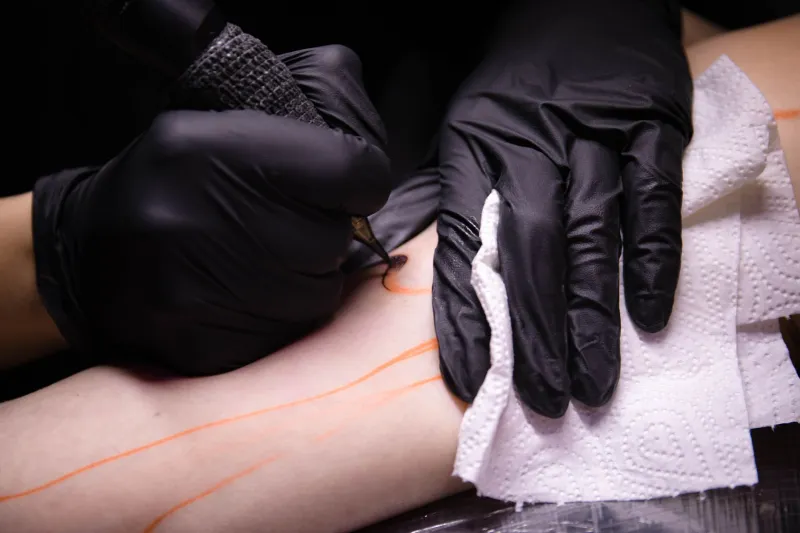
Detail crops. Hands only. A fresh wrap with no face. The design on paper. Healed shots taken by the client and sent in with permission. A private PDF link for consultations. A studio book that lives on the counter. A ‘no photo’ option that doesn’t make the client feel like they’ve ruined the content calendar.
If a client says no, the answer is ‘no problem’, not ‘but it’s great content’. The work can still be seen. It just doesn’t have to be seen on their skin.
The 69-Second Consent Check
Before any camera comes out, run this:
- Where will this image live — grid, story, website, portfolio, all of the above?
- Will my face, identifying tattoos or location be visible?
- Can I see it before it goes up?
- How do I ask for it to come down later?
- Is there a no-photo option on the booking form?
Sixty-nine seconds. Less time than a cigarette break. Less drama than a deleted post.
What This Means for Flash Drops and Queue Culture
Flash drops rely on hype. Queue culture runs on the buzz of the new. Neither needs to expose the person in the chair. A studio can show the flash sheet, the design and the finished piece without tagging the client or posting their face. The art is the advert. The person is not the product.
In fact, privacy can be part of the brand. ‘We’ll show the work, protect the person’ is a pretty good thing to be known for in 2026. It doesn’t kill the vibe. It just changes the crop.
The Bottom Line
Getting tattooed is a transaction, but it’s also a body thing. You’re allowed to want the ink without wanting the post. You’re allowed to ask for a photo-free appointment without apologising for it.
And if you run a studio, build the no-photo option before someone has to fight for it. Ask early. Note it clearly. Respect the answer the first time.
Bold ink, honest advice — and no surprise tags.