The Handbook Says Smart Casual: Visible Ink and UK Office Life in 2026

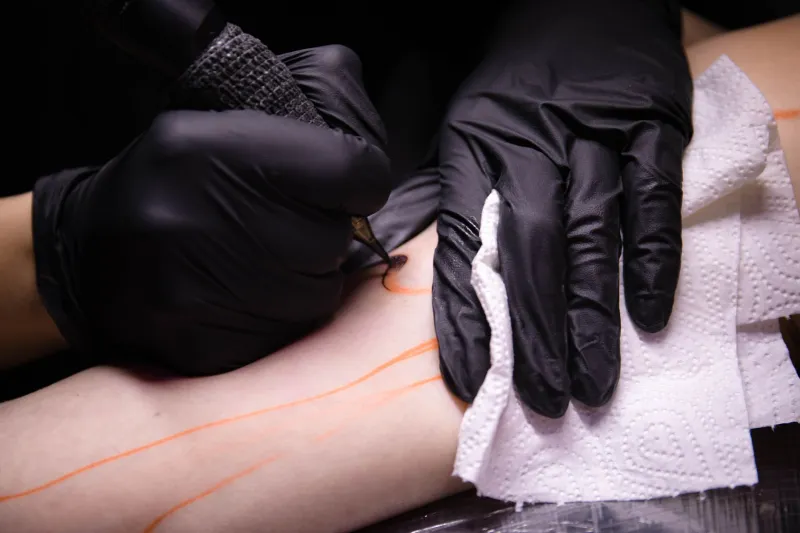
Photo: Patrick Mackie, CC BY-SA 2.0, via Wikimedia Commons
There is a very specific kind of silence that fills a UK office when a new starter rolls up their sleeves and reveals a full blackwork forearm. It is not quite shock. It is not quite approval. It is the sound of everybody mentally checking the staff handbook at once.
In 2026, visible tattoos and piercings are far more normal in British workplaces than they were a decade ago. Walk through a Manchester creative agency, a Bristol coffee roastery or a Leeds tech floor and you will see ink everywhere. But walk into a private client meeting in the City, a traditional law firm or a customer service desk with a strict uniform, and the vibe can shift fast. The rules are not always written down. And when they are, they are often vague enough to drive you mad.
So let us talk about the gap between what the policy says and what actually happens on a Tuesday morning.
The policy is rarely the whole story
Most UK dress codes do not mention tattoos at all. They talk about being "smart", "professional" or "representing the brand". That sounds neutral, but it leaves a lot of room for interpretation. One manager reads "smart" as a tailored shirt and no visible ink. Another reads it as clean jeans and a decent pair of boots. Neither of them is necessarily wrong.
The practical reality is that tattoos are not a protected characteristic in UK equality law in the same way as sex, race or disability. Employers can set reasonable dress codes, and those codes can include covering body art in certain roles. What they cannot do is apply the rules in a way that discriminates against a protected group. So yes, your employer can probably ask you to cover a sleeve for client meetings. No, they cannot suddenly invent a rule that only applies to you because they personally do not like snakes.
Our advice: ask for the dress code in writing before you start, especially if you are going through an agency. If the policy is vague, ask what it means in practice. "Is visible ink okay on the floor?" is a perfectly normal question. It is much less awkward than finding out on your first day by watching your manager's eyebrows climb.
Client-facing does not always mean cover-up
This is where the old assumptions get shaky. A lot of UK employers still associate visible tattoos with a certain kind of informality, but that association is fading. Finance and law tend to remain more conservative, particularly in client-heavy roles. Healthcare, hospitality and retail often have practical or uniform-based rules. Creative industries, tech, media and anything with a "no dress code, just use your judgement" policy are usually far more relaxed.
The smart move is not to hide who you are. It is to read the room. If you are meeting a new client for the first time, a light knit or a long-sleeve shirt is not a betrayal of your personality. It is just strategy. Once you know the client and the culture, you can loosen up. Plenty of people in UK offices cover for the first meeting and roll their sleeves up by week three.
Piercings follow a similar logic. A small stud or a subtle hoop is rarely a problem in most workplaces. A fresh facial piercing with a bright titanium barbell is more noticeable, and that is fine as long as you know the score. Check whether your workplace has a jewellery policy, and if you are in a role where hygiene or safety matters, follow it properly. Do not try to swap a healing piercing to a clear retainer before it is ready. That is how you turn a minor HR chat into a minor infection.
Interviews: do not audition your sleeve
There is a lot of conflicting advice about tattoos at interview. Some people say cover everything. Some say be completely yourself. The truth is somewhere in the middle, and it depends on the job.
If you are interviewing for a conservative, client-facing firm, covering visible ink is a reasonable move. You do not owe an interviewer a reveal before you have even got the job. If you are interviewing somewhere that clearly values individuality, you can be more open. Either way, do not apologise for your body art. Confidence reads better than a nervous explanation.
And if you are planning fresh ink, think about timing. A new tattoo on the back of your hand the week before a big interview is not a bold statement. It is a logistical headache. Book sessions around your work calendar where you can. Your future self will thank you.
The Monday-after problem
Nobody talks enough about healing around a day job. A fresh tattoo is essentially a wound, and an office is not always a friendly environment for one. Tight shirt cuffs, lanyards, backpack straps and endless chair friction are all small enemies.
If you can, book larger sessions for a Thursday or Friday so you have the weekend to get past the first wave of weeping and swelling. Wear loose clothing over the area. Keep the wrap or second skin on for as long as your artist told you to, and then follow their aftercare to the letter. Do not sit at your desk peeling cling film off your arm like you are unwrapping a sandwich. That is not a good look, and it is not good for the tattoo either.
Fresh piercings have their own office politics. Headphones, phone calls, hair, glasses and tight collars can all irritate a new piercing. Keep it clean, do not fiddle with it in meetings, and give it more time than you think it needs. If your workplace requires jewellery removal for safety, plan your piercing timeline around that instead of trying to rush the healing process.
Covering up without losing your style
If you do need to cover visible ink, you have better options than a sad cardigan. Fine-gauge roll necks, long-sleeve tees under shirts, lightweight layers and tailored jackets all work. Tattoo cover makeup can be decent for small areas, but test it before a big day. Clear retainers are fine for healed piercings, not fresh ones. And please, no cling film at your desk. That is a healing method, not office wear.
The goal is not to erase your style. It is to make a choice that works for the room you are in. Some days that means a sleeve on show. Some days it means a smart long-sleeve layer. Both are valid.
The 2026 reality check
UK workplaces are loosening up, but not evenly. The gap between policy and practice is still real, and it is still something you have to navigate with a bit of common sense. Ask questions. Get things in writing. Read the room. Do not assume the worst, and do not assume everything is fine either.
At Studio 69, we would rather you book a consultation around your work schedule than panic about a fresh tattoo in a Monday meeting. Your ink is part of you. It is not an HR incident waiting to happen. Treat it with a bit of strategy, and you can take it pretty much anywhere.