Dim Lights, No Small Talk: The Rise of the Quiet Tattoo Appointment
Photo: quiet tattoo studio dim lighting appointment calm atmosphere, via cdn.powerofpositivity.com
Not every tattoo appointment needs to sound like a house party. For years, the unspoken rule in a lot of UK studios was that you turned up, you chatted, you endured, and you left with a story. In 2026, more clients are asking for something different: lower lights, less small talk, and clear boundaries around touch, noise and conversation. This is not about being anti-social. It is about making a permanent body-art decision in a space where your nervous system is not screaming at you.
What a quiet session is not
A quiet session is not a demand for silence from the second you walk in. It is not a judgment on artists who love a bit of banter. And it is not a sign that you are difficult. It is an access need. Some people are autistic, some have ADHD, some live with anxiety or chronic pain, and some just find the combination of bright lights, loud music and constant chat completely overstimulating. A quiet appointment is simply an agreement: less input, clearer communication, and a shared understanding of what happens if you need a break.
What a good quiet session looks like
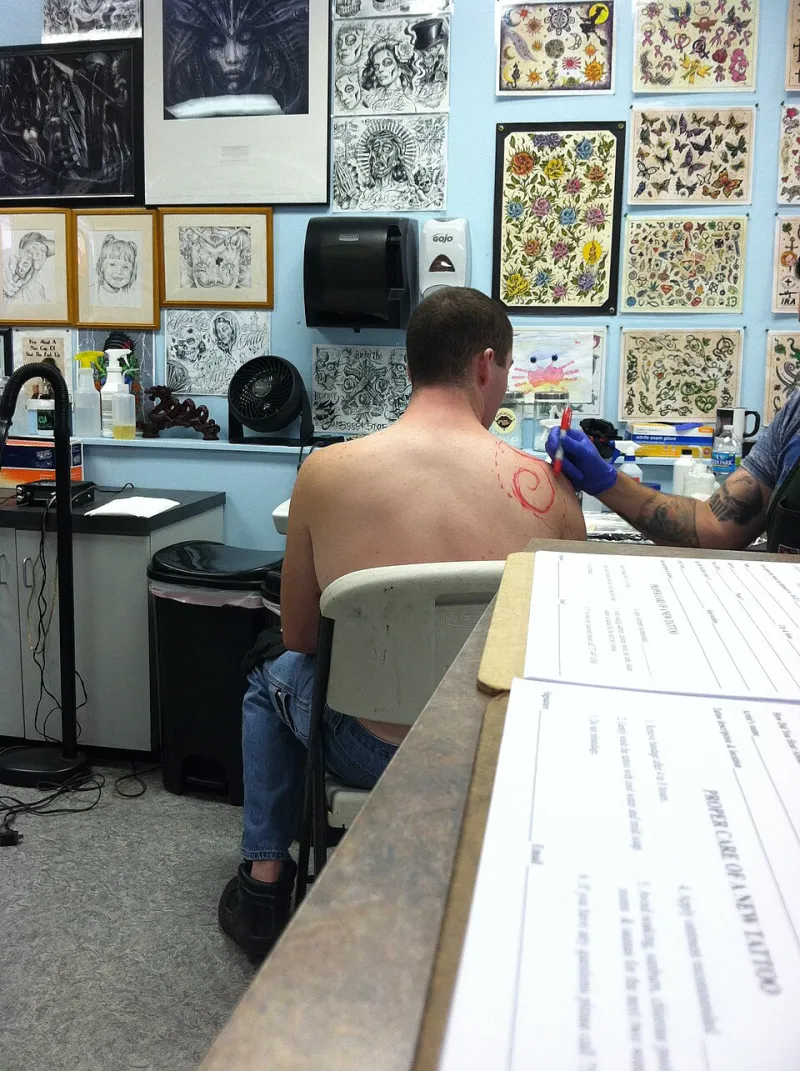
In practice, it can be small things. The artist might angle the lamp away from your eyes or dim the main lights. They might turn the music down, or let you wear headphones. They might agree to skip the usual 'so what do you do for work?' chat and stick to check-ins about the tattoo itself. For piercing appointments, it might mean a calmer room, a step-by-step explanation before anything happens, and a signal you can use if you need to stop. The key is that the boundaries are agreed before the needle comes out. A good studio will ask what you need and tell you honestly what they can offer. A good artist will not take it personally if you would rather not talk.
How to ask without the awkwardness
You do not need a diagnosis or a dramatic speech. At the booking stage, you can say: 'I get overstimulated in busy spaces. Can I book a quieter slot, and would you mind keeping chat to a minimum?' Or: 'I am autistic and I might need to wear headphones and take a break. Is that okay?' If you are not sure what you need, say that too. 'I am a bit anxious about the noise and the chat. Can we agree a signal for when I need a minute?' Most artists have dealt with nervous clients before. The ones who react badly are telling you something useful. You can also ask about the studio layout, whether there is a separate waiting area, and whether you can bring someone with you. None of this is unreasonable. It is just communication.
Why this is the most punk thing you can do
Tattoo culture has a long history of celebrating endurance. Sit still, take the pain, do not complain. There is a place for that energy, but it is not a personality test. Asking for what you need is more honest than gritting your teeth and dissociating in a chair. It also makes for better tattoos. If you are not white-knuckling your way through a conversation you hate, you are less likely to flinch, and you are more likely to hear the aftercare instructions. Studios benefit too. A client who feels safe is a client who comes back, and who tells their friends. The quiet session is not a trend that takes away from tattoo culture; it adds a bit of care to it. That feels pretty punk to us.
The studio side
Not every studio can offer a silent appointment, and that is okay. What matters is honesty on both sides. Studios can add a quiet option to their booking forms, brief the front desk, and stop assuming that everyone wants the full chatty experience. Clients can be clear about what they need and respect the artist's limits. If a studio cannot accommodate you, you have not failed. You have just learned that you need a different room. The best appointments are the ones where everyone knows the plan. Dim lights, fewer words, better boundaries. That is not a softer tattoo. It is just a smarter way to get one.