Ink Over Ink: What a Tattoo Cover-Up Really Asks of You
Photo: Tony Alter from Newport News, USA, CC BY 2.0, via Wikimedia Commons
A cover-up is not an eraser. It is a second design asked to solve a first design’s problems, using the same skin, the same placement and whatever contrast is already there. That is why the best cover-ups start with an honest conversation rather than a Pinterest board. At Studio 69, we would rather tell you the truth in a consultation than pretend a heavy black rose can disappear under a fine-line fern.
A Cover-Up Is a Design Problem, Not a Magic Trick
People often arrive with the same sentence: can you just cover it? The answer is sometimes yes, sometimes no, and very often yes if you are willing to go bigger, darker or in a different direction. A tattoo is ink in the dermis. You cannot paint over it like a wall. The new design has to work with the old ink’s shape, density and colour, or it has to be lightened first.
That is not a failure of imagination. It is chemistry and contrast.
What Makes a Tattoo Coverable?
Several things help. An old tattoo that has faded, softened and spread is often easier to work with than a fresh, saturated black piece. Smaller tattoos can be covered, but the new design usually needs to be larger than the original to give the artist room to build shapes and hide edges. Scar tissue, raised lines and blowouts can make coverage harder, and they need an artist who is confident working over textured skin.
Placement matters too. A cover-up on a flat, broad area such as a thigh or upper arm gives the artist more options than a tight spot near the ankle, finger or behind the ear. Skin tone and the colours already present will also shape what is possible. None of this means your tattoo is hopeless. It means the plan has to be specific.
Blackwork, Colour and the Contrast Conversation
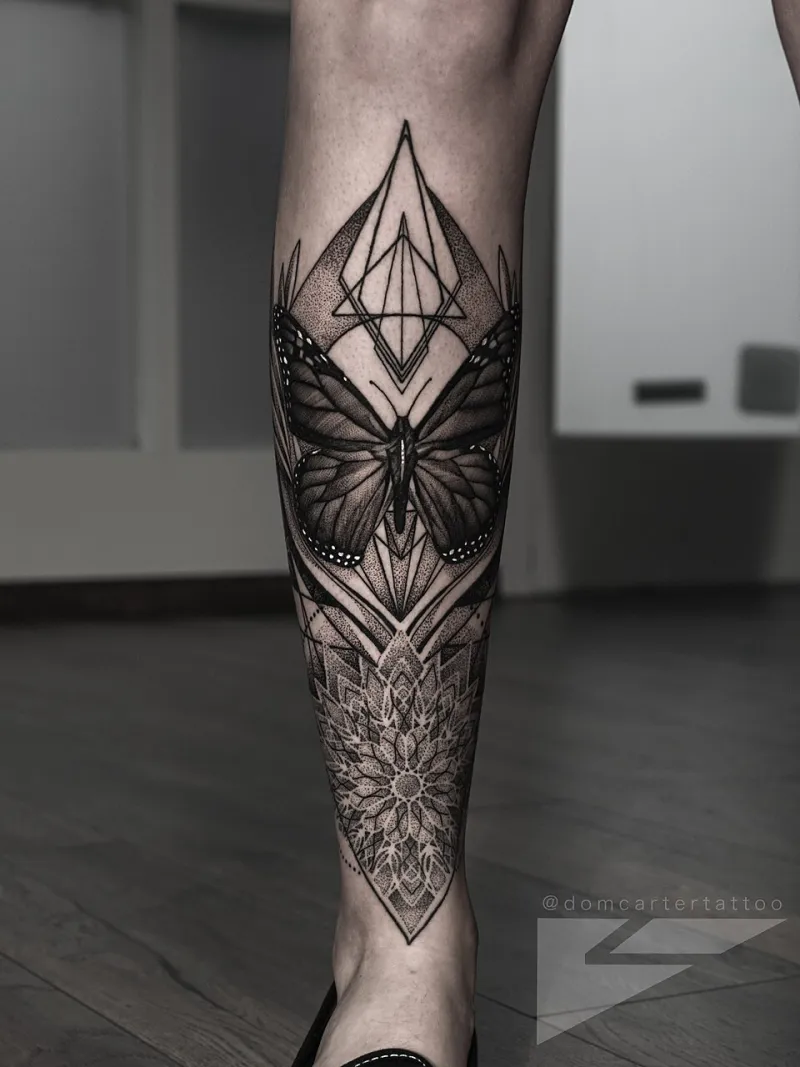
Blackwork is often the safest route for a cover-up because dense black can hide a lot of old detail. But blackwork is not a bin you can throw any tattoo into. If the old piece is large and dark, the new design may need solid areas, negative space and a strong silhouette to stop the original showing through like a watermark. Good cover-up blackwork is designed, not dumped.
Colour can work, especially over a faded tattoo or one that has been lightened with laser sessions. But colour is not opaque paint. Warm reds over dark blue-black can turn muddy, and light colours over heavy black will not magically appear. A skilled artist will talk to you about contrast, saturation and how your skin holds pigment. If someone promises that white ink will erase a dark tattoo, be suspicious. White can add highlights; it cannot act as correction fluid.
Laser is not a failure either. Sometimes a few sessions to lighten the old ink opens up a much better cover-up than forcing a design into a space that cannot hold it.
How to Brief an Artist Honestly
Bring clear photos of your tattoo in natural light, from a few angles, with no filter. Tell the artist how old it is, whether it has been touched up, and whether you have had laser treatment. Say what you dislike about it: the shape, the subject, the placement, the colour, the memory. That last one matters. A cover-up that hides the image but repeats the feeling will not solve much.
Be honest about budget and timeline. Cover-ups often take longer than a fresh tattoo because the artist is designing around an existing problem. They may need more than one session. They may recommend laser first. A good consultation should feel like a plan, not a sales pitch. You should leave knowing what is possible, what is not, and what the next step is.
It also helps to bring references for the mood you want, not an exact design to copy. A cover-up needs an artist to have creative room. If you hand over a rigid template and demand it fit over a tattoo it was never designed for, you are making the job harder for everyone.
Red Flags in the Consultation Room
Walk away if an artist promises to cover anything, at any size, for a bargain price, without seeing it in person or asking questions. Be wary of anyone who will not discuss laser as an option, who has no healed cover-up photos, or who rushes you into a deposit before you have seen a plan. A good artist will manage expectations. They will tell you if the design needs to be bigger, darker or completely different.
Also be careful of the opposite problem: an artist who says yes to everything because they want the booking. Cover-ups are a specialism. Ask to see healed work, not just fresh photos taken under studio lighting.
Aftercare for Skin That Has Already Been Through It
A cover-up is still a tattoo, but the skin underneath may have been through years of ink, sun and maybe laser. It can be more sensitive. Follow your artist’s aftercare advice, keep it clean, moisturise lightly and do not pick. Book a check-in if something feels wrong. And protect it from the sun, because a cover-up that fades unevenly will start to reveal the old design again.
The Bottom Line
A cover-up is not about pretending the first tattoo never happened. It is about turning a piece you no longer want into a piece you are glad to wear. That takes honesty, contrast and an artist who would rather give you a real plan than a fantasy. If you are in the UK and thinking about covering old ink, book a consultation, bring your questions and leave room for the design to be better than the original idea.
Your skin has a history. A good cover-up just gives it a stronger next chapter.