The Guest Spot Gut Check: Booking Tattoo Travel Without Coming Home With Regrets

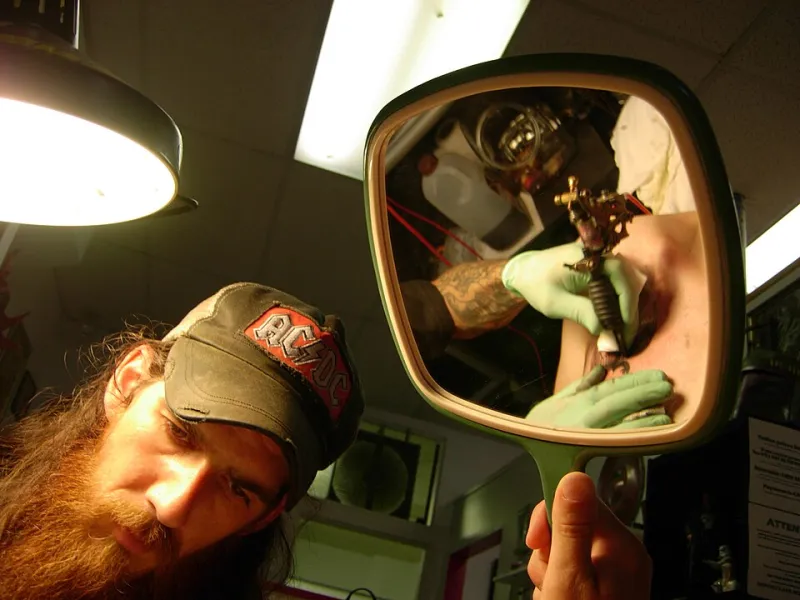
Photo: DanHenk, CC BY-SA 4.0, via Wikimedia Commons
Tattoo travel has never been easier to arrange and never been easier to get wrong. A guest spot pops up on Instagram, the artist's flash is exactly your thing, and suddenly you're pricing flights to somewhere sunny with a fresh outline under your jeans. Lovely. But a guest spot is not a holiday souvenir. It's a medical procedure with a deposit attached, performed in a studio you've probably never set foot in, in a country whose rules you might not understand. At Studio 69 we're all for collecting ink from brilliant artists around the world. We're just less keen on collecting regrets.
Vet the artist, not the grid
A beautiful feed proves someone can frame a photo. It does not prove they can line, pack colour or heal cleanly. Look for healed work — not just fresh, glistening shots taken under ring lights. Ask to see pieces at six months and a year. Check whether the artist has a permanent studio base, how long they've been tattooing, and whether their guest spot has been announced by the host studio itself. If the only evidence of the booking is a story graphic with a countdown sticker, slow down.
Also read the comments like a detective. Regular clients saying they've been followed for years are a good sign. A feed full of vague praise from accounts with no posts is not. And if an artist refuses to show healed work, brushes off questions about their licence, or gets spiky when you ask about hygiene, that's your gut check doing its job. Trust it.
The host studio matters as much as the guest
A guest artist is only as good as the room they're working in. Before you pay, find the host studio's name, address and licence details. In the UK, local councils license tattoo and piercing premises, and you can usually check those records. Abroad, rules vary wildly — some cities regulate heavily, some barely at all. Ask the host studio directly: are you licensed, do you use single-use needles and ink caps, how do you sterilise equipment, and what's your aftercare advice?
The answers should be boring and specific. If they're vague, defensive or full of phrases like don't worry about it, that's not a vibe. That's a warning. A legit studio will happily tell you what autoclave they use and where their sharps bins live. They might even be pleased you asked.
Deposits, currency and the cancellation trap
Guest spot deposits are usually non-refundable, and that's fair — the artist is travelling and holding a chair. But fair doesn't mean careless. Get the terms in writing: how much is the deposit, what it covers, what happens if the artist cancels, what happens if you cancel, and whether it can be moved to a future date. Pay by a method with some protection where possible, and keep receipts. Avoid sending large sums by bank transfer to a personal account with no paper trail unless you genuinely know and trust the artist.
Watch the currency maths too. A deposit that looks reasonable in euros can sting once your bank adds fees. And never pay the full balance weeks in advance to someone you've never met, in a studio you've never seen, just because they offered a discount for doing so. That's not a deal. That's a gamble.
Healing on the move is a different sport
Getting tattooed at home means your own bed, your own shower and a sofa to collapse on. Getting tattooed abroad means airports, trains, unfamiliar sheets and possibly a heatwave. Plan the healing, not just the appointment.
Book your session near the end of the trip if you can, so the first few days aren't spent sweating through a city break. Pack loose, breathable clothing that won't rub the area. Bring your usual aftercare supplies — gentle unscented wash, a light moisturiser, clean kitchen roll — because the local pharmacy might not stock what your skin likes. And keep the fresh ink out of direct sun. That means no sunbathing, no sunbeds and no I'll just sit in the shade with my arm out. UV is not a team player.
Sun, sea and the swimming lie
We'll say it plainly: no swimming in the sea, pools, lakes or hot tubs while your tattoo is healing. Not with a waterproof dressing. Not for five minutes. Not because it's your holiday and you've earned it. Water is full of things your open skin doesn't need, and a sea swim can turn a neat heal into a patchy, infection-shaped mess. If you've booked a beach holiday around your appointment, you've booked the wrong order of events. Ink first, beach later — or beach first, ink on the last day.
If it goes wrong abroad
Sometimes it does. The line blows out, the studio is filthy, the artist ghosts you, or the healing goes sideways. First, get medical advice locally if you're worried about infection. Don't wait until you're home. Second, document everything: photos, messages, receipts, the studio address, the artist's name. Third, contact the host studio in writing and keep it factual. If you paid by card, ask your bank about chargeback options. If the studio is licensed, the local licensing authority may be interested too.
And if the work itself is the problem, don't rush to fix it in another country with another stranger. Get home, let it heal, and book a consultation with someone you trust. Corrections are their own project.
The Studio 69 guest spot checklist
Before you book: check healed work, confirm the host studio and licence, read the deposit terms, ask about hygiene and aftercare, and pay safely. Before you fly: pack loose clothing and your own aftercare, plan the healing around your itinerary, and accept that sun and swimming are off the menu. After you're home: keep the area clean, watch for redness, swelling or heat that gets worse rather than better, and ask for help if something feels off.
Travelling for ink can be one of the best ways to build a collection that actually means something. Just don't let the excitement do the booking. A guest spot is a brilliant thing when the artist, the studio and the plan all stack up. When they don't, the best tattoo is the one you walk away from.