The Four-Month Handbrake: Blood Donation With Fresh Ink or New Metal
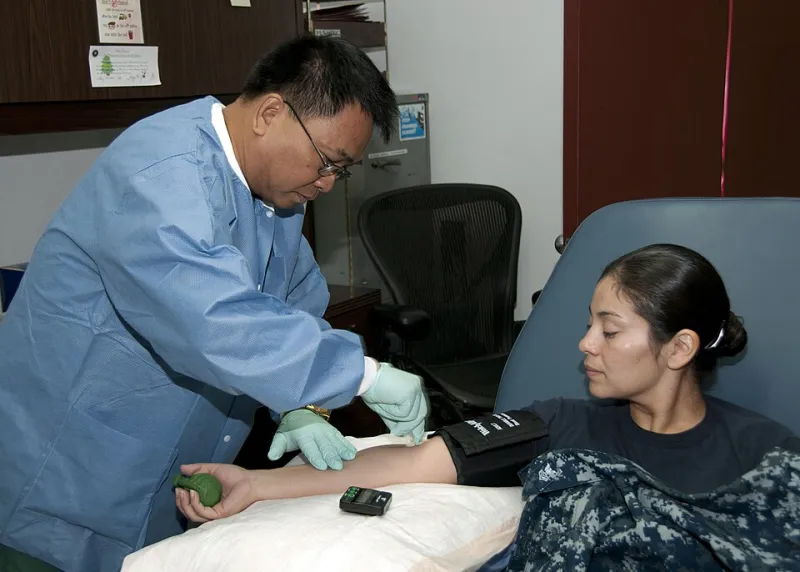
Photo: U.S. Navy photo by Mass Communication Specialist 2nd Class Gabrielle Blake, Public domain, via Wikimedia Commons
There's a particular kind of heart-sink that happens in a church hall on a Tuesday evening. You've booked the slot, you've drunk two pints of water, you've mentally rehearsed being brave about the finger-prick test. Then the screener gets to the tattoo question and your brand-new forearm piece — three weeks old, still glossy, absolutely gorgeous — quietly disqualifies you. You go home with a biscuit and no good deed done.
This isn't a lecture. It's just that the rules here are unusually clean-cut, and knowing them means you can stop losing evenings to them.
The rule, in plain English
Across the UK, blood services ask you to wait four months after a tattoo, a piercing, or a semi-permanent makeup treatment before you donate. Four months from the date the needle went in — not from the day the peeling stopped, not from the day the studio signed it off. If you were tattooed today, you're looking at a donation date somewhere in mid-March 2027 at the earliest.
The same four-month window applies whether you sat for six hours of blackwork or got a single lobe punched at a kiosk in a shopping centre. It applies to microblading, semi-permanent brows, lip blush and cosmetic eyeliner. It applies to dermal anchors and to that piercing your mate did with a kit off the internet.
Worth saying: the UK wait used to be longer than four months, and it's been shortened before on the strength of evidence. So treat the number as current guidance rather than eternal law — check your nation's blood service website before you book, because England, Scotland, Wales and Northern Ireland each publish their own version and small details can diverge.
Why a spotless studio doesn't get you off the hook
This is the bit that annoys people, and fair enough. Studio 69 opens sealed, single-use needles in front of you. So does every reputable studio in the country. Artists are licensed, inspected, and audited. Why doesn't that count for anything?
Because the donor service can't verify it, and it isn't really making a judgement about you or your artist. The four-month window is a blunt, population-level precaution. It covers the stretch of time in which certain blood-borne viruses might not yet show up reliably on screening. Waiting out that window is what keeps the blood supply safe without the service having to assess the hygiene standards of thousands of individual studios and kitchen-table piercers. It's a sledgehammer, not a scalpel — but it's the sledgehammer that lets them say yes to a recipient with confidence.
So no, a certificate of hygiene, a photo of the autoclave, or a receipt with a nice logo on it will change the answer. Save yourself the queue.
The stacking small print nobody warns you about
Four months is the headline, but a few other things can quietly extend your gap:
- Infection. If your tattoo or piercing got angry, wept, or needed antibiotics, you're not just waiting out the four months — you need to be fully recovered and off treatment before you're eligible.
- Feeling well. You can't donate with a cold, a temperature, or a dodgy stomach. Fresh ink plus a winter lurgy is a double no.
- Iron and anaemia. Regular donors get their haemoglobin checked every time, and a low reading means a deferral regardless of your ink.
- Travel. A holiday, a trip home, or a stint abroad can add its own waiting period on top, and the two don't cancel each other out.
- Some vaccinations and treatments. Certain jabs and procedures carry their own short waits.
The upshot: don't treat four months as a guaranteed date. Treat it as the earliest possible date, then check the rest of the list.
Doing the calendar maths properly
If you donate regularly — the usual rhythm in the UK is roughly every 12 weeks for men and every 16 for women, depending on the service — then the sensible order of operations is obvious once you see it written down. Donate first, get inked second. Book the session for the week after your donation, and the four-month deferral slots neatly into the gap you'd have been taking anyway. You lose nothing.
If you're already tattooed and the deferral is live, put the date in your phone with a reminder. Four months is long enough to forget, and the last thing you want is to turn up, get as far as the chair, and be sent away — especially if you talked a nervous friend into coming with you.
And if you're stacking appointments — new ink in November, a cartilage piercing in December, brows topped up in January — be honest with yourself about when the clock actually restarts. Each fresh procedure resets it.
Please don't fudge the form
The donor health check is a legal declaration, not a personality quiz. Marking "no" because you really want to donate, or because you're fairly sure your studio is clean, or because you think you'd know if something were wrong, puts a stranger's health in your hands without their consent. The screening exists precisely because you can't know. The nurses have heard every version of "but it was a really good place" — and it isn't their first rodeo.
Be straightforward, take the deferral if it applies, and come back when the calendar says you can.
The short version
Four months from the procedure date. Studios being clean doesn't change it. Piercings, guns, microblading and dermal anchors all count. Infection and illness add time. Donate first, then book the ink, and your good deed and your good tattoo stop competing for the same weekend.
One biscuit-related delay is forgivable. Two is just poor planning.